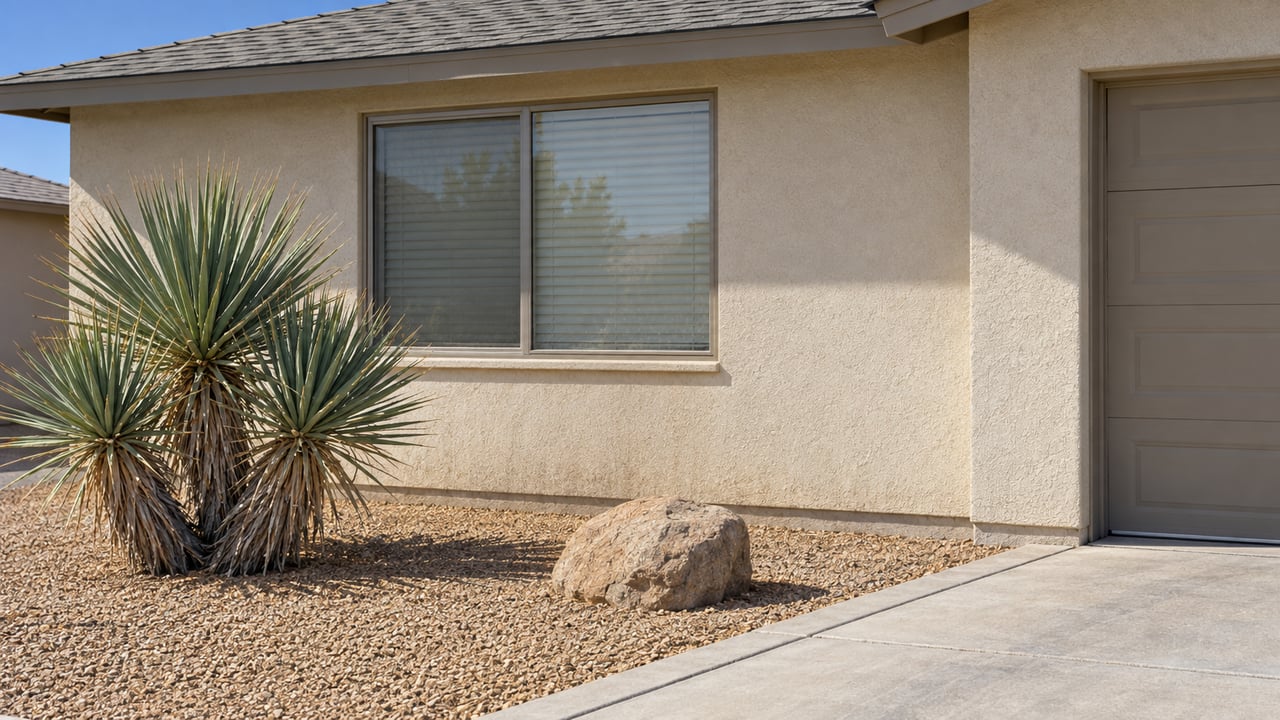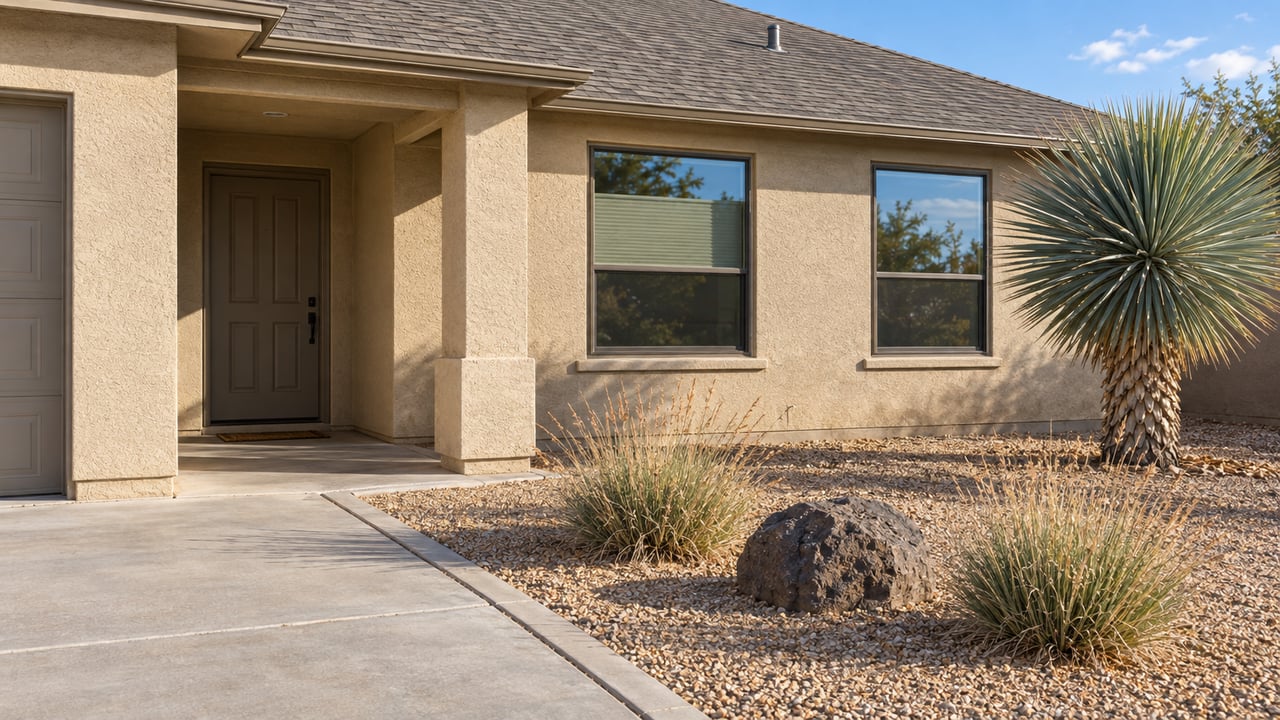
You tour a house in the Northeast Heights. The seller hands over a disclosure packet showing $1,650 a year in property taxes. You do the mental math, add it to your PITI, and the payment feels workable. Six months after closing, your first full tax bill arrives at $3,900. Nothing changed about the house. What changed was you.
This is what New Mexico homeowners have started calling "tax lightning," and it is quietly shaping every offer written in Albuquerque right now. If you are shopping the metro this summer, the number the seller pays is not the number you will pay. Understanding why is the difference between a comfortable closing and a budget scramble.
The friction that catches buyers off guard
New Mexico has one of the more generous homeowner protections in the country. Under Section 7-36-21.3 NMSA, the annual increase in assessed value on a single-family owner-occupied home is capped at 3%. A neighbor who bought in 2010 has watched their assessed value crawl up by that ceiling every year while the actual market value has raced ahead. Their tax bill reflects a house that was worth half what it is worth today.
The cap is a shield. It is also a trapdoor. The moment title transfers, the shield disappears. The Bernalillo County Assessor is required by statute to reassess at current market value, which for a straightforward purchase means your sale price. Your assessment resets to roughly one-third of what you paid, the county's mill rate is applied to that figure, and your new tax bill lands on you, not the seller.
An Albuquerque Journal letter in July 2026 put concrete numbers on the jump. For a lateral move to a virtually identical $385,000 home a few blocks away, "the sudden, uncapped reassessment can instantly add $2,000 to $3,000 a year to their tax bill," roughly $200 a month for the privilege of changing addresses. That extra $200 shows up in your escrow analysis about twelve months after you move in, and it does not go away.
How the reset actually works
The math is not complicated once you see it laid out. New Mexico assesses residential property at one-third of appraised market value, then applies the local mill rate.
| Step | What happens | Example on a $400,000 purchase |
|---|---|---|
| 1. Reset trigger | Sale closes, cap lifts | Assessor pulls purchase price from the affidavit filed at closing |
| 2. Assessed value | 33.33% of market value | ~$133,333 |
| 3. Exemptions | Head of Family, veteran, etc. subtracted | Head of Family: -$2,000 |
| 4. Mill rate | Bernalillo County residential rate applied | ~21 mills × $131,333 |
| 5. Annual bill | Assessed value × mill rate ÷ 1,000 | ~$2,758 |
The exemption line matters more than it looks. The $2,000 Head of Family exemption and the $4,000 exemption available to qualifying veterans are not applied automatically at closing. You have to file the paperwork at the Bernalillo County Assessor's office, and the savings only start after the exemption is on record. Skipping that filing leaves $150 to $200 a year on the table, every year you own the house.
There is also a reporting duty most buyers do not know they have. Under 7-38-8 you are responsible for reporting yourself as the new owner and submitting the purchase price by affidavit. Title companies often handle this, but the statute puts the obligation on you, and the Assessor's guidance is explicit that you should not rely on third parties to make the report.
Why this is freezing the middle of the market
Here is where the mechanism starts to explain the numbers you are seeing on the portals. The Greater Albuquerque Association of REALTORS® Q2 2026 report, published July 24, showed new single-family listings down 5.8% year-over-year to 2,624, with the median sales price up 3.5% to $380,000. Weekly Altos data for the ABQ MSA the week ending July 10, 2026 showed 1,802 active listings against 1,135 pending, with 44.6% of active inventory carrying a price reduction. Metro-wide inventory has climbed to about 4.9 months, the loosest reading since early 2020, and average days on market sits near 34.
The averages hide the split. Homes under $375,000 are still moving in about three weeks. Homes above $500,000 are averaging closer to 61 days. That gap has an explanation beyond mortgage rates.
The move-up buyer is the one who feels tax lightning hardest. A homeowner who bought in the Northeast Heights ten or fifteen years ago is paying property tax on an assessed value that is a fraction of today's market value. To trade that house for something modestly larger, they do not just take on a bigger mortgage at a higher rate. They also take on a fully reset tax bill on the new home, which can add hundreds of dollars a month before the first paint chip lands on the drop cloth. So they stay. Listings above $500,000 accumulate. Inventory in the mid-tier thins because sellers who would have traded up are not trading.
That is the "so what" behind the July 2026 numbers. The metro looks balanced on the surface and is anything but balanced underneath.
What this means for your offer
If you are the buyer, three specific things change once you understand the reset.
Underwrite to your purchase price, not the seller's tax history. Assume roughly 0.75% to 0.85% of your purchase price annually as a starting property tax estimate for Bernalillo County, then verify against your specific address with the Assessor before you remove financing contingencies. A $425,000 offer carries a very different escrow line than the seller's disclosure suggests if they bought in 2012.
Ask what taxing districts the property sits in. Bernalillo County mill rates are not uniform. Properties inside Albuquerque city limits carry the city portion. Pockets of the North Valley and Corrales that are unincorporated do not. Homes inside the MRGCD boundary carry an additional assessment. Two houses on opposite sides of a boundary line can look identical and tax differently.
File your exemptions in the first 60 days. Head of Family, veteran, and any additional exemptions you qualify for require a one-time application at the Assessor's office. Nobody at the closing table will do this for you, and the county does not backdate.
If you are the seller, the reset is a negotiation reality worth naming early. Buyers who are represented well will price their offer against their post-reset carrying cost, not against your current tax line. Pretending the gap does not exist tends to produce longer days on market, especially above $500,000 where the buyer pool is already thinner. Getting ahead of it with a clean estimate of what taxes will look like for the new owner is a small piece of listing prep that pays for itself.
Protesting the value if the number looks wrong
The Assessor mails a Notice of Value each spring, typically by April. You have 30 days from the mailing date to file a protest. The first stop is an informal review with the Assessor's office, and many cases end there. If it does not, a formal hearing follows before the County Valuation Protests Board. Useful evidence includes your own recent purchase price if the assessed value came in high, comparable sales the assessor may have missed, and documented condition issues. This is not a tax appeal in the abstract. It is a valuation appeal, and the standard is current market value.
FAQ
Does the 3% cap transfer if I sell my long-held home and buy again in Albuquerque? No. New Mexico does not currently allow the cap to port to a replacement primary residence. There have been legislative proposals to change this, most recently from Rep. Matthew McQueen, but as of mid-2026 no portability exists. Your new home starts fresh at market value.
What if I buy new construction? The first year a property is added to the tax rolls it is not subject to yield control, and there is no prior owner's assessment to compare against. Your assessment is based on the completed value of the home, and the 3% cap begins applying in subsequent years.
Does the cap protect rental properties? The 3% cap applies to single-family owner-occupied homes. A property you buy as a rental is reassessed at market value each year without the same protection.
Can my lender's tax estimate at closing be wrong? Yes, in both directions. Lenders often estimate the first year using the seller's most recent bill, which understates what you will owe after reset. Ask your loan officer to run the estimate against your purchase price and the current mill rate for the property's address.
Tax lightning is one of those Albuquerque details that never shows up in a national buying guide, and it can quietly reshape what a house actually costs to own. If you want a clear read on your specific street, mill rate, and expected reset before you write an offer, Carrie Telles is happy to walk through it with you. Schedule a free consultation and get the numbers pinned down before closing day, not after.